Wednesday, February 16, 2011

Comment is Free, But...

Even though I am inured to large swathes of mediocrity in the popular press, every now and then, there comes a gem that really tests tolerance.

My daily fix is a cocktail of Indian Express (slightly right-of-center), Hindu (more than slightly left-of-center), and The Telegraph (excellent guest writers, and by itself fair and balanced—truly, not in the Fox News sense).

But just look at one of the editorials (Facing the Music) in today’s Indian Express.

First, blatant massaging of facts – “…after his 15-member troupe was found to have over $100,000 in their possession, undeclared to customs authorities…” No, all reports specified that the money was found in his carry-on and checked-in luggage, not that of the entire troupe.

Second, and this is the gem that got me hooked, the editor labels the episode “…a garden-variety civil law infringement…”, when it is an indictable, criminal offence. Garden-variety? Must be the same garden where the editorial staff grows the stuff they smoke.

Next, hyperbolic description of routine investigative procedure “…was grilled for over 20 hours by the Directorate of Revenue Intelligence, his manager’s and relatives’ homes were raided, and his passport has been impounded…” In actual course, most of the 20 hours would’ve been vexing and, yes, unnecessary sitting around; the raids on related parties likely originated in his answers; and impounding of passport seems logical when the incident is at the departure gates of the international air terminal.

Another howler – “…while the law does give the authorities the option to detain the offender, must it be used as a matter of course, even when there is little chance of the offender fleeing the law…” For God’s sake, the man was at the international airport on his way back home, where our law has no currency. What would you have the authorities do?

Fifth, the editor makes a sweeping generalization “…a longstanding pattern at our airports…”, referencing incidents involving other high-profile accused persons – Mr. Anil Nanda, Mr. Avinash Bhosale and Ms Sheetal Mafatlal. This is the cardinal sin in any macro commentary: generalizing from isolated and cherry-picked anecdotesand to top it all, they pick examples that are incompatible with the conclusion being advocated (probably depending on the fickle and short public memory; to have forgotten the facts). Ms Mafatlal’s case, as chronicled here and here, shows that there was a prima-facie case against her, and the law took its course thereafter. No more, no less.

And finally, the editorial laments “…incidents of this kind are accompanied by the harsh possibility of humiliation (compounded when the individual is famous or visible in some way, so that the customs authorities have a chance to grab the headlines) when simply allowing the law to take its course should suffice…” Well, if you’d let them, Dear Editor, the law will simply take its course; the media circus is not of the customs authorities’ making.


p.s. A newspaper has two sides to it. It is a business, like any other, and has to pay in the material sense in order to live. But it is much more than a business; it is an institution; it reflects and it influences the life of a whole community; it may affect even wider destinies. It is, in its way, an instrument of government. It plays on the minds and consciences of men. It may educate, stimulate, assist, or it may do the opposite. It has, therefore, a moral as well as a material existence, and its character and influence are in the main determined by the balance of these two forces. It may make profit or power its first object, or it may conceive itself as fulfilling a higher and more exacting function.
C P Scott; A Hundred Years (Comment is free, but facts are sacred); 1921

Thursday, April 22, 2010

Deal or No Deal

As l’affaire IPL moves towards its denouement, I am amazed by the utter disregard towards burden of proof – by both professional and lay commentators. This is best reflected in sympathy for Shashi Tharoor (“poor guy; now nobody is innocent-until-proven-guilty”) and indignation towards Lalit Kumar Modi (“this IPL is a real can of worms; off with his head”) but as the dramatis personae now cover large swathes of the well-heeled, others too have been subjected to such indiscriminate thought, freely expressed over the vacuous mainstream media.

This may just be an illustration of Dante’s “...hasty opinion too often points the wrong way and then affection for one’s own opinion binds up the intellect”. But I suspect it is more deep-rooted, rooted in our conditioning to harbour only shallow expectations of those in public life; to conflate investigation and prosecution; and to understand nothing of jurisprudence beyond presumed innocence.

First, what is burden of proof? It is the standard by which a case is decided. In a court of law, this standard spans a wide range. In different civil disputes, for example, balance of probabilities or preponderance of evidence is used. It is in criminal cases that the standard is for the state to prove the accused party’s guilt beyond reasonable doubt (and it is here that the aforementioned crowd-favourite – presumption of innocence – applies).

Anyway, none of these distinctions are germane to Mr. Tharoor’s case. In the reams of commentary, there have been a few nuggets of sense which harked to the “Caesar’s wife should be above suspicion” standard. Had we as a nation maintained a strong moral fibre, yes indeed, but as Charles Baxter wrote, “Fuck and alas”. That’s simply too much to expect, given the depths to which our polity has sunk. Yes, that betrays my own diminished expectations, but my expectations are not non-existent; another standard does apply – when prima facie believable charges are laid unto someone in public life, the defence should bear an "air of reality”. Mr. Tharoor’s elegantly phrased explanations didn’t come close to any such bearings and, better late than not, he’s out of his ministerial job (only that, not from public office). And in any criminal matter relating to this episode – not that there is one, the media and mob’s attention having shifted to readying other guillotines – the presumption of his innocence is intact.

As for the fallout – the flurry of activities on part of various investigating agencies that the central government controls – what should we make of that? These agencies are doing their job and yes; their timing, vigour, simultaneity and hype together admits strong suspicions that this is a vendetta; but that is – and should be – irrelevant to the actual investigations. A thorough investigation is important because at some stage, we have to restore the credibility of these law-enforcement agencies. There have been far too many episodes when they have betrayed the truth in the interests of the established order; far too many cases of governments in power directing investigative agencies to zealously purse flimsy charges (or, in other instances, directing to desist them from pursuing strong cases) – and this reflects in the poor conviction rates that most of these agencies achieve.

Once again, important as it is, this discussion doesn’t apply to the brouhaha around Mr. Modi. He is under investigation and, by all accounts, he is serving the requirements to cooperate with the agencies involved. He is not yet charged of wrong-doing in any competent forum. Again, to return to burden of proof, investigating agencies are using reasonable suspicion as the standard to question and investigate him and others related to the IPL. But investigation is not the same as prosecution: for that, these agencies have to satisfy themselves that there has been violation of some or more laws, and then they will file charges in competent forums. It is then that the prosecution begins.

Bizarrely, however, there is this loud and sustained public and media indignation, accompanied with the clamour for his dismissal. For what? Allegedly, for doling out favours to “friends and family”! But what is his answerability to the public or the media? The fact that BCCI is a public body is not established unconditionally. That the IPL is a public body has never even been discussed. So, the standards that Mr. Modi should be judged by are those as were agreed to in constituting this IPL entity. As far as I can tell, the public – or public interest – had no role.

Joining such ill-informed chorus is certainly not a substitute for (and indeed, probably an enemy of) the real measures required to improve the management of cricket in India – as Kirti Azad and others have shouted themselves hoarse suggesting, lets figure out how to reform BCCI. Till then, for all us cricket fans, the combination of good cricket and the off-field farce reminds me of that old Jimmy Durante song, “Did you ever have the feeling that you wanted to go and still have the feeling that you wanted to stay?”

ps:
Sid Hudgens: Something has to be done, but nothing too original, because hey, this is Hollywood. Off the record, on the QT, and very hush-hush.
Captain Dudley Smith: Reciprocity, Mr. Hudgens, is the key to every relationship.
LA Confidential (1997)

pps:
Governor Jeb Bush asked Bernie McCabe, the state attorney for Pinellas County, to "take a fresh look" at this already exhaustively investigated case… …"I wouldn't call it an investigation," he told me in a telephone conversation. The word "investigation," he said, "is a term of art in my business."… He then explained: "When I conduct an investigation, it would mean that I have a criminal predicate. In other words, that I have some indication that a crime has occurred. That's my job.”… …"In this circumstance, that does not exist at this time. So what I'm attempting to do is respond to the governor's request by conducting what I'm calling an 'inquiry' to see if I can resolve the issues he raised."… …He chuckled at his use of the word inquiry. "It may be a distinction without a difference," he said…
Cruel and Unusual, New York Times, June 23, 2005

Wednesday, April 14, 2010

The Eleventh Commandment

Shashi Tharoor was a successful diplomat, is a bearable writer (when allowed more than 140 characters) and one of our few telegenic and coherent politicians. But what’s with the IPL shenanigans: is he merely foolish, or does he believe he is beyond reproach?

One could laugh at his being tone-deaf to the calls of his new profession – when you are in public life, it is not enough to do the right thing, you have to also be seen to be doing the right thing (the deluxe hotel residency facts were ‘made to look right’, post revelations); you’ve got to be somewhat more sensitive than openly mocking party decisions (cattle class and holy cows); and you’ve got to keep intra-ministry differences exactly that – intra-ministry. But hey, he’s learning on the job and we like him, so let all this be. It was wrong, but there are worse things to worry about (different from his fans who found nothing wrong with the cattle class tweet or living the high life).

But this IPL mess makes me wonder: is he actively plotting to get thrown out of politics? Has he collected enough material to write a sequel to The Great Indian Novel and would like to be left in peace? Because if this mess isn’t by design, he’s either plain stupid or is living in some hubristic la-la land. Or both? That’d make him the invincible twit.

Read his official statement – it is full of howlers. In (1), he says “...approached me for help and guidance...” (after the auction, this read “...was pleased to give Rendezvous Sports World my encouragement and blessings...”: blessings, I saw, and thought – good, he’s making an effort, learning the vernacular). In (7), he admits he spoke to Lalit Modi but presents a different version of the contents of his chat. (6) is a bizarre version of “No Comments” – here’s a lady you know very well, who is likely to be your spouse; she gains a reported Rs. 70 crore as “sweat equity” in this franchise; you admit (2) that your “... role in mentoring the consortium included several conversations with Mr Lalit Modi...”: why wouldn’t anyone on the sidelines believe that the payoff is for services rendered by you (and/or for your continued patronage and, yes, “blessings”), and not recompense for Ms Pushkar’s unknown contributions? Also, why Lalit Modi took this matter public (5) or what he should do – or not do – about revealing shareholdings in other IPL teams are irrelevant. He’s not in public life and need not be compelled to similar disclosure standards.

BJP’s talk of a CBI enquiry is balderdash. There’s nothing in this exchange that comes under the ambit of corruption, as defined in our laws. It is a transaction between private parties, the bidding was transparent, and indications that the Commissioner is not happy about who won suggests that it wasn’t Dr. Tharoor’s clout (such as it is) swung it Kochi’s way. The question isn’t “should Shashi Tharoor be prosecuted for corruption”?

However, it IS about what sort of people we want in public life. It is one thing to live with those from a different era who, by now, have shed any pretensions of propriety. But for these “21st Century Indians” in politics, who have made a fetish of their being “different” than the “average/ old-gen guy”, let’s not tolerate them. We’ll make the same mistake as did our previous generation – complicity of the silent – as the latest set in politics promises a new dawn, which will turn out as false as the last one.

Saturday, March 13, 2010

The curious incident of the dog in the night-time

I am bewildered by the paucity of rational dissent to the Womens Reservation Bill. Why are metro-middle class citizens and the media – both sets who, recently and vociferously, pilloried the extension of caste-based reservation – why are they now cheering the introduction of gender-based reservation?

The injustices to – and the plight of – women in India troubles me a lot. But forget cheering this bill, even condoning it only panders to bourgeois yearnings; this initiative is not a substitute for (and indeed, is probably an enemy of) real measures required to create a just society.

In support, the politicians (either out of real personal conviction or cravenly submission to party diktat) and their tawdry cousins, the chatterati – are using various hyperbolic pronouncements (historical rationalization, grand social ideas, etc.) to obfuscate the obvious: identity politics and proportional representation are short-term and ultimately, chimeral solutions.

Reserving seats in the parliament or state legislatures for women will do only as much to better their lot as similar reservations did for scheduled tribes and castes (probably less, as this reservation is for elected office only, not government jobs). There will be a tiny minority that appropriates power and benefits and the huge majority will get little, if any, of the trickle-down.

The proponents are unintentionally aided by the theme of the main dissenters inside the parliament: this bill will become palatable with ‘sub-quotas’ in the mix. That is an unhelpful line, as it begins by conceding the merit of gender-based reservations – but it does bring to mind all of the let’s-exclude-the-creamy-layer slogans that the cheer-leaders of this bill made during the anti-caste-based-quota brouhaha.

There isn’t a dearth of legislation aimed at protecting or promoting women-specific causes in India: i.e. it is not as if the male-dominated legislative bodies have, to-date, been shy of enacting laws. The problem is that these laws have not yielded the desired outcome: and neither law enforcement nor changes in societal prejudices are even a likely – forget ineluctable – outcome of having more women in the legislature­­­­.

If our leaders were serious about bettering the cause of women – or disadvantaged individuals of any gender, caste, denomination, preference – they could do much better. The grievance redressal mechanisms have ossified and most steps from filing a complaint with the police to getting a judgment from the courts are daunting and inefficient – and sometimes illogical or perverse. More broadly, access and enabling better education to reach girls and women – or disadvantaged individuals of any gender, caste, denomination, preference – so that they can actually stand up for their rights as individuals (in their family, community, workplace, or any other group) is absolutely essential. And, as elected representatives, it is your duty to make that happen: whether you are a male or female, young or old, from the North or South or East or West, from whichever caste or religion, and from whichever political party and ideological conviction.


ps:

Gregory: "Is there any other point to which you would wish to draw my attention?"

Holmes: "To the curious incident of the dog in the night-time."

Gregory: "The dog did nothing in the night-time."

Holmes: "That was the curious incident."

The Adventure of Silver Blaze, Arthur Conan Doyle

Sunday, December 20, 2009

Rough draft of history?

The latest issue of India Today is a 34-year look-back since the magazine came into being. Each year gets a page worth of recap for a major story and “The Main Event” – an excerpt from India Today’s contemporary writing on the big news of the year. While the choice of major stories and “The Main Event” can be debated, what caught my eye was the juvenile attempt at obfuscating its own contemporary timidity. The “Main Event” excerpt for 1976 is the magazine’s denouncement of forced sterilizations carried out in that year – but is taken from the May 31, 1977 issue (i.e. once the political climate had swung completely). The 1975 excerpt (from the December 15, 1975 issue) characterizes the Emergency declaration as a “swift and silent constitutional step”.

One would think that India Today has enough confidence now to look at its past honestly. Doesn’t seem like it – hopefully it will get there in the next 34 years. For what use are these contemporary historians if they can’t even reflect on their documented conduct honestly.

Tuesday, May 12, 2009

Catching the drift

Over the last 5 years, our political landscape was fairly stable – and so was the formula for the governing coalition: a strong center, with a sizeable entity to its left (communists or samajwadi) plus handful of smaller allies, all more flexible and mostly more left-leaning in persuasion.

How will this look going forward? We’ll know for certain only once the dust settles but there are enough indicators to put some stakes in the ground.

First, a wholesale drift towards a more centrist and flexible stance is already evident – rarely before have we seen such public declarations of promiscuous desires. Congress-I and BJP are both clearly open for business with all comers. This drift is not just demand-led: smaller parties have jettisoned all baggage of their origins (NCP, the anti-“foreigner” anti-BJP option, Samajwadi party as the “secular” non-Congress alternative) and are racing each other to flexible centrist positions, maximizing option value. BJD climbed the fence immediately before the elections, JD(U) protests too much in underlining its fidelity towards the NDA, and others (AIADMK, Trinamool) have let their silence speak for them. Even the left is now open to a rapprochement, realizing that what they did last summer has outlived its usefulness.

Second, smaller supporters are likely to carry more bargaining power than in previous coalitions. Even though their Prime Ministerial dreams won’t fade away, these are unlikely to be realized for most of them in this round. It is also difficult to see any one of the supporting parties becoming as sizeable a block by itself as the Communists were in the first 4 years of the outgoing regime. So the ruling coalition will likely comprise more number of smaller supporters. This doesn’t bode well for the processes at key economic ministries – imagine a few years with not one telecom ministry but many such sectors where ministerial appointments or policy announcements are first made by the regional satrap and the Prime Minister’s job is to acquiesce. 

Next, the relevance of ‘strong independents’ is now behind us. Not the Page 3 contenders, who will go back to their day-jobs once the television spotlight shifts, but loners and party rebels of different hues who would contest and win. This consolidation within the fragments is not just an outcome of the rising ‘price of entry’ – cost of a credible candidature – but also of increasing elasticity of affiliations in leaders and parties. Mr. Sadhu Yadav does not need to be a rebel independent candidate, there’s someone already willing to take him in. George Fernandes, undoubtedly the most politically relevant non-party contender, is unlikely to win.

All this comes together in what is euphemistically labeled “lack of issues”. In their desire for flexibility, no one has really championed major issues. The UPA had many credible and creditable wins (e.g. NREGA) which it failed to project sufficiently; BJP was strangely subdued in supporting their “strong leader” message when challenged (surprisingly and with more spirit than substance) by Dr. Manmohan Singh; SP leaders didn’t bother reading their manifesto; and the BSP did better – they didn’t issue one.

If anything, this is the single biggest strategic shortcoming of any party, and certainly of Congress-I and BJP. There are issues aplenty: national security, poverty, the specter of demographic dividend becoming a drag in the absence of job opportunities for youth – it is a long list on which one of them can take the high-ground, present a coherent message of how they intend to achieve the desired outcome and then message it repeatedly to the electorate. The timing of these elections weren’t a surprise to anyone – so there’s no excuse for not doing adequate homework on resonance with different electorates and then going hammer and tongs using targeted media.

The commoditization of positions - which is what a centrist, flexible drift implies - will hurt major parties disproportionately - and for their long-term interests, they need to carve out distinct positions on key issues. It is also what is needed to present informed citizens with true choice among those who wish to govern. 

Monday, February 23, 2009

Dear Diary: Jai Ho

You know it is kaliyuga when Anil Kapoor is on the Oscar stage and you are more happy than surprised that his crew won. 

Well done, all you folks of Slumdog Millionaire. I'll still think Mirza Ghalib when I see Gulzar but hey, that statue will make for a nice paperweight, won't it? 

Saturday, January 03, 2009

Patria o Muerte!

Returned a few hours back after watching the first part of Che, which was released in UK today. You should see it at the first opportunity - and if you can, also set aside some thinking time afterwards. 

Yes, the god he followed has failed - the economics everywhere and the politics of it, almost equally so. But the ideal remains. And very few come to mind who pursued it with the purity that Ernesto (Che) Guevara de la Serna brought: not for nothing did Sartre call him "the most complete human being of our age".

In these days, the romanticism of this character seems over the top - this fusion of the self with the revolutionary ideal, giving up all individual materialist aspirations to create a community of collective maximizers, this thinker-soldier-statesman who was at ease in a range of settings - but, as was said of another purist, "Generations to come will scarce believe that such a one as this ever in flesh and blood walked upon this earth".

ps: I do hope Steven Soderbergh and Benicio Del Toro (and Laura Bickford) will be the ones who move Che beyond the T-shirts and memorabilia that Alberto Korda's Guerrillero Heroico spawned.

Wednesday, December 31, 2008

With Friends Like These...

Looks like Joe Biden was on the money when he predicted a "major international crisis" early on in the Obama administration (okay, the timing was a bit off, we are still in 43's closing days, but no one takes him seriously any more). Operation Cast Lead didn't come from North Korea or Syria or Iraq or Russia or Cuba or Venezuela. Israel's air camapign on Hamas has retrained the world'd attention on what started it all in the middle-East: remember, Palestine v. Israel* is the real big top, even though the Iraq tent became more prominent in recent times. 

Obama should declare (at least) - and soon. How he handles this will have a greater impact the Arab world's perception of the "new" US than how he unwinds Iraq. People will forgive some slips there (W's mess etc) but on Palestine, he'll be judged by his own doing. If he is true to his "principled stand" claims, it is still possible that he'll come out in favor of Israel on this (or some other) tactical steps but it is also probable that he'll have a strategic emphasis that means a move away from their historic preferences. In any case, continuing to wait is a bad option - the default setting; given the reality, perception and propoganda of decades, is not one that makes the man on the street trust the US or its allies in the region

*Note: Like much of the problems around the middle-East (and some of the South Asian ones too) that the US is dealing with, even this is an inheritence. A classic understatement of this: "...the origins of the Arab-Israeli problem are too complicated for easy summary, but among the points normally overlooked by most of the British media is that the government of the United Kingdom bears a unique responsibility for the problem. It sold the same real estate twice. In the direst moments of the first world war Britain promised the same territory to the Jews and to the Arabs..."

Friday, December 19, 2008

Charity begins (not) at home!

One Indian name high up on the Clinton Foundation Donor List is a certain Amar Singh. He's second only to Laxmi Niwas Mittal among desi donors (and very much in the group that gave between $ 1mm - $ 5mm). 

What are the odds that it isn't the Hon' MP Mr. Amar Singh (Samajwadi Party, Rajya Sabha) but some other Amar Singh? I couldn't find the full list (which will have some more details than the NYT summary, I trust) on the Clinton Foundation website - there's a press release that says it has been put up.
 
Even in these depressed times, LNM's net worth is well into double-digit billions. But what about Mr. Singh? If it is the socialist socialite, a  report in Indian Express (7 Nov 08) says he has declared owning movable and immovable assets worth Rs. 37 crore (no mean sum, right, but the cash in hand and bank deposits within this are about Rs. 5.7 crore - for him and Mrs. Singh together). At these levels, it takes a large heart to give away $1mm (at least Rs. 4 crore). 

Of course, it's his money, he can do what he likes with it - but as a person in public life in India, it is a worthwhile question to ask how this compares to help he's provided charities closer home.

Maybe it wasn't charity at all - he could have just been buying a celebrity visitor.

Has someone else - any one of Mr. Singh's wealthy friends (wealthier, actually, he's not in the poor house himself) donated on his behalf? What sort of disclosure norms should we expect from our politicians? As a MP, he's already a public servant - and somewhat more influential than the average member, if one believes half of what is written

Enough. For more, tune into the main stream media, which should pick it up in due course. And then proceed to make a complete hash of the issue.

Thursday, November 27, 2008

Stithi tanaavpurn magar niyantran mein hai...

Some form of “…situation is tense but under control…” will be the official version of Mumbai now. The first part is indeed true; the rest will become true soon – for the short run. 

Given the locus of these incidents, expect a lot more stridency in the voices that carry through popular and business press regarding the need for swift action, changes in laws and policing etc. Sadly, an examination of past reactions suggests that most of the talk will be misguided at best and dangerous, more likely.

“We need more stringent laws to deal with terrorist acts!” No we don’t. Maharashtra Control of Organized Crime Act (MCOCA) is already in force and some other states have similar specific laws to deal with such situations. Even without specific ‘terrorism related’ Acts; the absence of statutes is never an issue for investigation or prosecution – note how a much-maligned state has used the Arms Act to increase conviction rates.

We need a federal police to deal with major crimes such as terrorism” No we don’t. We need better police to deal with these or other crimes. And there’s no reason to believe that the central police will be better than the state police set-ups. The CBI suffers from the same ills that plague state police departments and the contagion will spread to any new agency that is set up.

“The rabid Hindu fundamentalists are behind this. It is a great threat to our secular fabric.” No, it isn’t. A bunch of criminals did this – well coordinated and effective, given the number of simultaneous acts they managed to execute in secrecy. And we need to solve that problem, not create another one by giving this unproven communal color.

“All muslims aren’t terrorists but all terrorists are muslims. Hindus are under threat because of the pseudo-secularists.” No, they aren’t. Terrorism is an instrument that fanatics among most religions use today – including the atheist naxals. And the random firing and bomb blasts do not discriminate by religion in their impact. All of us are under threat because of poor governance.

Which is what it’s all about – poor governance. Across party lines and in most states, self-serving leadership took charge of the legislative branch (similar demographics as the Founding Brothers but alas, not the same commitment to meritocracy and institutions) after independence and spawned, in the main, an avaricious next generation of leaders who collectively hollowed the polity during the 1970s and 1980s. Unsurprisingly, the current crop of leaders – from the Grand Old Party to the one with a difference through the various newly empowered classes – all are captives to the criminals in their midst. The real fix to our ills – at least on the law-and-order side of things – is to weed the criminal elements (the criminals, conspirators and their tacit supporters) out of our legislative wing.

A word of caution. Do not hold your breath. 

Shorter term fix – which may be equally difficult to get through – is to tackle the mix of intelligence, police, investigative aspects. 

Given the coordination needed for this attack, this is a significant intelligence failure. We have, among democratic nations, one of the most extensive internal intelligence setups in the world. Lets shake the deadwood out and focus them on things that matter. Police: separate the lathi wielding and the traffic police from the units needed for such situations. We need more and better equipped ATS and other special-weapons-and-tactics units. The supreme sacrifice of senior officers is a testimony to their individual courage even when in an under-funded and poorly organized part of the force. Investigation – again, we need specialists for the job – those who focus on solving the crime and not on media appearances. 

A mix of effective intelligence, police response and investigation will make future aspirants to such acts pause. 

We survive on such hope. And, as the newspapers and magazines will remind us in a few hours from now, on the incredible resilience of the Mumbaikers etc etc.

Tuesday, August 12, 2008

May the tribe increase


Congratulations Abhinav. For someone whose first real Olympic memory is 0.01 seconds and Cristina Cojocaru, hearing the national anthem play in Beijing is a huge deal.
You are modest. This is refreshing but Gavaskar, who had a different take on self-promotion, put it well after reaching 10,000 runs in Test cricket "...others might reach the milestone too but everybody will remember who got there first, much as everybody remembers the first conquerors of Mt. Everest, Hillary and Norgay..."
Enjoy the rest of your time at the Olympics!

Sunday, October 16, 2005

Asato ma sad gamaya; Tamso ma jyotir gamaya

After the Times of India (whose disregard for fact and laziness in verification I had written about in an earlier post) and a number of other uninformed publications, it is the turn of the President of India, Dr A P J Abdul Kalam to have been misinformed – and become a party to spreading misinformation! This is what he said at a meeting of senior police officers in Hyderabad: “You will realize that some of the developing countries, which are already in danger of terrorist attacks, have been singularly chosen to provide such high resolutions about them”.

No! Mr. President, you are wrong.

Forget fact checking, just repeat to yourself what you’ve been reported as saying. It doesn’t just sound absurd, it IS absurd. There’s no percentage for Google in conniving with terrorists! In fact, there’s no percentage for Google to be “singularly choosing” one, some or all of the developing countries! Why should they?

After thinking about this for a bit – when it will likely be clear that there is no motive that can link Google to be singularly choosing developing countries – you should have got someone on your staff to do a simple fact checking exercise. And this is what 10-15 minutes on the internet will uncover – basic facts such as:

1. The highest resolution areas are of locations in the US. In progressively decreasing order, Canada, Europe, other “developed” nations and metropolises in the third-world follow!

2. US’s interests abroad have been mapped out in great detail. These include areas in Iraq – where US military forces are currently engaging with enemy combatants. This mapping is NOT, presumably, to give any additional information to the enemies, it is because folks back home are likely to be curious about where their sons, daughters and loved ones have been sent to!

Easier still, have someone look through the software’s “Common Questions” page and test the claims for veracity. These newspaper-wallahs don’t have the systems in place to cross-check anything: that was obvious from that un-researched and incorrect Times of India article about areas around White house being “blanked out”. However you, sir, have a greater responsibility to the citizens of India for veracity in your statements. Specially because of your non-political background and previous scientific training and experience, your statements on such issues are taken more seriously by most.

And in this instance, there has been a slip-up. I trust some heads will roll in your speech-writing division and your people will learn not to depend on random newspaper articles for conclusions. As for you, even if in vain, I will hope that you will realize the error and – sooner rather than later – use some occasion to let the world know that by itself, the availability of more and better information that is freely accessible by all is an unambiguously good thing.

N.b. From the Rig Veda. See the entry at Wikipedia here.
अस्तो मा सद् गमय तमसो मा ज्योतिर्गमय मृत्योन् मा अमृतं गमय् ॐ शांति शांति शांति
Which transliterates to: Asato Ma Sad Gamaya; Tamaso Ma Joytir Gamaya; Mrityor Ma Amritam Gamaya; Om Shanthi Shanthi Shanthi

This means: "O Lord, Lead Us From Untruth To Truth, Lead Us From Darkness To Light, Lead Us From Death To Immortality, Aum (the universal sound of God) Let There Be Peace Peace Peace."
Erratum [Monday, October 17, 2005; 7.14am]: The Wikipedia entry reproduced above is sourced wrongly. As Piyush points out in his comment, it “is from the Third Brahmana of the Brihadaranyaka Upanishad (1.3.28), which discusses the life force, i.e., Prana”, not from the Rig Veda. Sorry.

Thursday, October 13, 2005

I am monarch of all I survey; My right there is none to dispute

Political discourse in our country is pedestrian – that’s not news. But there’s treasure everywhere: here’s an example which will make even the most jaded among us laugh out loud. According to Ms Ambika Soni of the Congress-I, “The BJP is a failed party because of the leadership which is autocratic and does not consult” (while discussing Pramod Mahajan’s commentary on BJP’s leadership).

Good heavens! Have you no shame, dear lady? Yes, I know, politics is the art of the impossible but how can say that and keep a straight face? You are in a party where, as even any child interested in checking facts will know, since 1967 (yes, that means since even before there was anything called the BJP), there has been no democracy within the party whatsoever!

In the 27 years since 1978, P V Narasimha Rao has been the President of your party for 5 years and Sitaram Kesri (he who had to cry and place his cap at Mrs. Sonia Gandhi’s feet to “prove his loyalty”) for another 2; for the rest 20 years, your first family preferred to be in command directly! Oh, and before I forget, just before 1978, who was the President of Congress-I? A certain Mr. Dev Kant Baruah who is remembered only for his (one) quotable quote: “India is Indira and Indira is India”. And who will be your next President? Most likely someone who – in what morphed quickly from an interview to only an informal chat – claimed that he “could have been the Prime Minister of India at the age of 25”. Goodness me, yes, the BJP’s leadership is indeed ‘autocratic’ and ‘does not consult’.

Let us face it – our politics is now a complete extension of the feudal setup that the society has endured for ages. Political power is completely concentrated in the hands of one leader per party (Mrs. Sonia Gandhi, Ms Mayawati, M/s Vajpayee, Mulayam S Yadav, Lalu Prasad, Pawar, Karunanidhi… the list goes on), not one party has any sort of working inner democracy (oh, of course they differ in degrees but when the whole class is failing, there’s little succor in Student x failing by a slightly smaller margin than Student y), power is bequeathed to wife and/or child (recent examples include Mr. Hooda in Haryana, Mr. Dutt’s daughter in Mumbai, Mr. Deora next door, Mr. Akhilesh Yadav in UP… this list goes on and on too!) and this bug contaminates all who come in contact! Socialists (Mulayams and Laloos of the world who reaped the harvest sown by Ram Manohar Lohia, Karpuri Thakur et al in their avowed struggle against the same feudal mindset), dalit leaders, communists are all infected now!

For our friends in the BJP who gloat (Ms Soni’s comments notwithstanding) that this is not so in their “organization based” party; pause, fellas – concentration of power is as strong in your setup too (and foster families are included in this reckoning). For the other friends – those of the communist variety – well, yes, you’re the ones who seem to be the in the ‘just failed’ category, but with Comrade Karat bending the spirit (even though not the letter) of the law in bringing his wife to the Rajya Sabha (alongwith that gadfly, Sitaram Yechuri) – not to forget the business interests of Comrade Basu’s son from the good old days – you’ve started your journey on the slippery slope too. The regional parties are almost always – and usually congenitally – single-leader centered.

Till the time that the votes reside either in the countryside or in urban slums – and they do so today, disproportionate to the relevant population distribution – the only way out is for the bourgeoisie (that’s you and me, dear reader – and don’t panic, please, that term has a meaning outside the Marxist lexicon too) to insist, at every given platform and at every snatched moment, that the government’s priority be more and better primary education. Until the voters are better educated, there is no redemption from these quasi-kings and queens: they are not likely to make a rational choice unless they can make the connection between the exercise of their franchise and their (or their children’s) development of the economic variety.

On the issue of education and the political process, the person who got it right was Robert Lowe (1811-1892), 1st Viscount Sherbrooke. In the matter of extending the franchise to all adult male members in England, he was of the opinion that first, “we must educate our masters, the people; else we will be at the mercy of a mob masquerading as a democracy”.

Closer home, one of the more prescient members of the Constituent Assembly, Frank Anthony (Central Provinces & Berar, General), had the following to say regarding the grant of franchise to all adult citizens “…if we had pursued the path of wisdom – more than that – of statesmanship, that we would have been justified to hasten slowly in this matter, that we would have not at one bound adopted the device of adult franchise but will have proceeded progressively; not necessarily gradually but progressively… …when the next elections are fought or the elections after that and with an electorate which will be predominantly illiterate, with an electorate which will be predominantly unaware of exercising the franchise on a basis of being able to analyze political issues in a rational way, that this electorate will not be stampeded by empty slogans by meretricious shibboleths into chasing political chimeras which will not only lead to chaos but to the very destruction of democracy which we have chosen to give them.” (Emphasis added)

If this sounds elitist, so be it! But before you jump to conclusions, mark Mr. Anthony’s words – “not necessarily gradually but progressively”. And of course, there’s no question of turning back the clock now. But the imperative is for all of us to lend our voice to the cause of education because without it, things are going to remain the same. Ach nein; not in the solutions mode again! There’s so much more to be written on that. I began this post mostly to share the mirth which Ms Soni’s comment produced in an otherwise drab day! Lets leave it at that, then – with at least the intent to come back to this topic at a later date.

N.b. Perhaps the real tragedy was in having, as the acting President of the Constituent Assembly, a person who embodied all that was good in our countryside – and whose estimation of his fellow villagers was based on self-referencing (and therefore a romantic, not realistic view) than a hard look at how vested interests could manipulate things.
Dr. Rajendra Prasad, in his closing remarks,
said the following in reply to Mr. Anthony’s point: “Some people have doubted the wisdom of adult franchise. Personally, although I look upon it as an experiment the result of which no one will be able to forecast today, I am not dismayed by it. I am a man of the village and although I have had to live in cities for a pretty long time, on account of my work, my roots are still there. I, therefore, know the village people who will constitute the bulk of this vast electorate. In my opinion, our people possess intelligence and commonsense. They also have a culture which the sophisticated people of today may not appreciate, but which is solid. They are not literate and do not possess the mechanical skill of reading and writing. But, I have no doubt in my mind that they are able to take measure of their own interest and also of the interests of the country at large if things are explained to them. In fact, in some respects, I consider them to be even more intelligent than many a worker in a factory, who loses his individuality and becomes more or less a part of the machine which he has to work. I have, therefore, no doubt in my mind that if things are explained to them, they will not only be able to pick up the technique of election, but will be able to cast their votes in an intelligent manner and I have, therefore, no misgivings about the future, on their account. I cannot say the same thing about the other people who may try to influence them by slogans and by placing before them beautiful pictures of impracticable programmes. Nevertheless, I think their sturdy commonsense will enable them to see things in the right perspective. We can, therefore, reasonably hope that we shall have legislatures composed of members who shall have their feet on the ground and who will take a realistic view of things.” (Emphasis added)
Dr. Rajendra Prasad’s village – Jiradei – is a part of the Siwan parliamentary constituency. Were he alive, his MP – serving a respectable 4th term as a member of the Lok Sabha – would have been Mohammad Shahabuddin.

Wednesday, October 12, 2005

Jodi No.1

Isme action hai, drama hai, suspense hai, comedy hai… aur yeh baki blog ki kahaniyon se jaraa hat ke hai… Ladies and gentlemen, I refer of course to the ongoing saga of the IIPM and cronies vs. many outraged bloggers.

See here for details on what happened (If you’re feeling lazy, this is my recollection: Some time back, a youth magazine called JAM writes an expose on IIPM. Subsequently, someone starts a story (almost surely false) that Aaj Tak has done a story on how JAM was paid off by Amity (as if they aren’t in enough trouble themselves already; and forgetting that JAM had done a recent expose on them too) to do this IIPM story and that JAM is a rag anyway. Now, the pace picks up: Mr. Gaurav Sabnis (enter our hero) writes about this at his blog and trashes IIPM. Ms Rashmi Agarwal (Editor, JAM) – enter, stage right, the heroine – also jumps in and asks for a copy of the Aaj Tak tape. Before you can say aafreen, the empire strikes back: there’s an absolutely hilarious legal notice that IIPM served to JAM, e-mailed to Sabnis and finally, a series of nothing-hilarious-about-them vitriolic, personal comments were left on Rashmi’s blog).

What got me involved was the utter disregard for (a) facts; (b) principles; and (c) decency (in most instances, all at the same time) displayed by the supporters of IIPM against M/s Sabnis and Agarwal. Facts first, most of the posts (see here and here for two samples) by these supporters are juvenile in their forgery and misrepresentations and have been outed within a short span (see here and here for the two examples – I was unhappy to have missed this detail in my response). Principles: IIPM’s disregard of Voltaire’s “I may not agree with what you have to say but I will defend to death your right to say it”. And last, but perhaps the most incendiary, the decency bit – where these supporters of IIPM made it personal: with the comments at Rashmi’s blog.

Anyway, much has been said and done. I agree with some of the lets not fight a wrong with another wrong thoughts that PK and Vijay Krishna have advocated (though PK retracted his views after Sabnis resigned his position at IBM/ Lenovo). On this resignation bit, quite uncalled for, I say: yes, yes, I admire Gaurav’s conviction and willingness to take a stand but this step was unnecessary, I thought (as Patton would’ve had reminded you, the object of battle is not to die for your country, it is to make the other poor bastard die for his).

As I write this, I believe the lawsuits epidemic is spreading: another blogger – Varna – reports receipt of an e-mail from IIPM’s legal cell, and in these inflationary days, the claim has been increased by Rs. 500million (Ms Varna is being sued for Rs. 1.75Bn as against the temporarily unemployed Mr. Sabnis’s Rs. 1.25Bn). As the Irish are given to asking “Is this a private fight or can anyone jump in?” Oh well, I’m in it anyway so here’s to more power for the bloggers in their fight with ponytail.

Saturday, October 08, 2005

Rogue's Gallery

I wish I could remember his name – even if only to confirm that the delightful story is indeed true: it seems this poet was nominated to Rajya Sabha in the early years of our republic. He attended the house regularly without participating much in the deliberations. When parliament was not in session, he retired to the mofussil town he was from. In one such visit, a friend – a local journalist – asked him what he thought of the future of the country, now that he sat among those who were charting the course. Our man, it seems, launched into a comparison of how the seating arrangement in the house reminded him of the branches of a majestic tree and how this tree was the centerpiece of the whole garden i.e. our country. The friend asked him to get to the point, to which he replied:

Ek hi ulloo kaafi tha, barbaad-e-gulistan ke liye
Har shaakh pe ulloo baitha hai, anjaam-e-gulistan kya hoga

Many years have passed since this exchange; the story remains the same. And at no occasion has this been better exemplified than in the dissolution of the Bihar assembly. Here’s the current list of birds perched on the same tree:

Buta Singh: Writes two letters to the President. In the first, he buids a case that JD-U and BJP were trying to cobble together a majority by winning over MLAs from other parties (surprise, surprise!). The trend – per newspaper reports (!), his meetings and intelligence inputs – was escalating and that if not arrested immediately, would give rise to further horse-trading. He asked the President, in this first letter, to take “such action as deemed appropriate”. About 3 weeks later, he picks up his pen again and, adds just one data point to the exact words of his first missive i.e. that some more “perhaps are moving towards the JD-U”. He was more forceful in his (garbled) plea – the assembly be “dissolved, so that the people/electorate can be provided with one more opportunity to seek the mandate of the people”. He is prescient – inferring intent from assumed future actions (“perhaps are moving towards”), bases it first on newspaper reports, then on his own sleuthing and only last on “intelligence inputs” and, indeed, is “fair and balanced” (only the JD-U and BJP are up to these shenanigans)!

Lalu Yadav: Knows that his standing (and ability to stay a few steps ahead of the law) rests on his remaining in power (direct or otherwise) in Bihar. Is therefore willing to cajole, browbeat, buy, manipulate to maintain his hold (“forced” the Governor into sending his second report, Prime Minister into convening the cabinet post-haste and the cabinet into this recommendation). Is this hidden from anyone? And Mr. Yadav’s Machiavellian instincts allow him to be quite blasé about the verdict “It is our victory as the apex court has not ordered revival of the dissolved assembly.” Never have ends more succinctly justified the means!

Shivraj Patil: Is only a clearing house for correspondence, it seems. Has the strangest spin on the Supreme Court verdict: when asked whether this was an indictment, he says “Yes or no – depends on what angle we see the judgment from. The ruling has also said the election process should continue”. Which angle do you want to see this from? The Court clearly says “The proclamation of May 23, 2005 dissolving the Bihar legislative Assembly is unconstitutional” and that it will not interfere in the election process already underway. Tring tring: that's “unconstitutional”, Home Minister – it doesn't come much clearer.

Manmohan Singh: Our intellectual, conscientious head of the government who, in his quest for continuance in power, has progressed from condoning wrong-doing (criminals in the cabinet) through encouraging wrong-doing (actions of his colleagues in Jharkhand and Goa) to now practicing it! (“Around 10 pm, when Kalam had retired to his presidential suite in the Baltschug Kempinski hotel, his secretary, P M Nair informed him that the Prime Minister was on the line. They were said to have had a long talk during which the President was briefed on Buta Singh’s report to the Home Ministry and the decision of the Cabinet. The Prime Minister, it’s learnt, informed him that the notification could be signed by the President and faxed to Delhi.” is the sequence in l'affaire dissolution).

A P J Abdul Kalam: Plays – admirably well – the role of Dhritarashtra in this episode. Again, from the same archives, “Rashtrapati Bhavan officials say that the President, who was busy working on a power point presentation he was to make at the Russian Academy of Science and Moscow University on Monday morning, sat down to examine the Cabinet recommendation and the Governor’s report. He then held consultations with his aides and, by 1.30 am, his consent on the Assembly dissolution was faxed from the Kempinski to New Delhi.” Last night, a compere on television tried a lame apology “What could he do – he had no option but to sign and return it” and was rightly put in her place with a reminder of what any Class VII student knows from his civics lessons – the President has the duty to accord accent but only after due consideration and he also has the right to send it back once for reconsideration by the cabinet. Mr. Kalam is perched on the same tree as the rest of this crew.

Indeed, Anjaam-e-gulistan kya hoga!

Stop worrying about Bihar, dear readers: the entire casts of characters above – bar one – have decision rights for the whole country, and that includes where most of you live! And guess which one is likely to be punished? Only that one exception whose remit is restricted to Bihar: there is a move afoot to give Buta Singh a slap on the wrist. Do the math yourself.

Wednesday, October 05, 2005

Cricket, India and Bharat

This is why these jokers will lose and the other ones will win – Mr. Raj Singh Dungarpur doesn’t like that fact that his opponent, Mr. Jagmohan Dalmiya, “pronounces it as ‘kirkit’ or ‘krikate’ and fortunately he doesn’t have to spell it” (Indian Express; Online Edition). Oh, what a bad outcome for all concerned with Indian cricket but there it is again – India vs. Bharat – a divide more pernicious than the digital one, the urban/rural one, and any other that we face today.

Wake up and smell the coffee, partner: the days when you were Raj Singh Laxmansinhji (Maharajkumar of Dungarpur) are long, long gone and Jaggu dada – bad pronunciation and all – stands at least as tall as you in any forum. Second, choosing between you and him on grounds of cricketing knowledge will test even those most proficient in measuring things on nano-scales (see here for Mr. Dungarpur on the 1983 World Cup win “That World Cup was won by accident”; or read a factual account of his era of revolving door captainship – Srikkanth, Azharuddin, Tendulkar, Ganguly). Third, when it came to getting a voice in global cricket affairs that is commensurate with India’s contribution to its popularity, Dalmiya did more than you ever could (even though – or maybe because – you spent more time blending in). And fourth, the numbers are against you, my man – Bharat wins every time that it gets an opportunity to contest India: on a sometimes level, at other times a disadvantaged field. Remember the Ambani vs. Wadia battle? Nirma vs. Unilever? Dhanraj Pillai vs. K P S Gill?

Yes, I too hope that at some time in the future, Bharat’s wins will not mean throwing away the baby (civility, rules and equitable enforcement, rationality, etc.) with the bathwater (these sanctimonious, holier-than-thou faux-gentlemen who are happy to look the other way only if it is “one of us” bending the norms) but if I have to choose between a louse and a flea, let the Bharatiya pest win over the imposters, thank you very much.

As for the cricket, we'll just have to continue to be happy with the individual brilliance of our boys (may their tribe increase) for none of these administrators inspire any faith, do they?

Tuesday, October 04, 2005

One swallow does not a summer make

Have you seen how well the Indian Railways has been doing recently? It seems that under Mr. Lalu Prasad Yadav’s stewardship, the ministry’s financial performance is on a strong northerly course – 15% earnings growth in the first 6 months of the current fiscal, fares down (by a whisker, but still, who’s heard of deflation in these times), innovative ticketing and other services etc. Amazing, isn’t it? To think that this was the man being reviled not so long ago for his import substituting ways (khadi, khullar and lassi for cotton, plastic and Coke). More importantly, isn’t this the same man who systematically ran Bihar to the ground through his unbroken stint in power since 1990?

What has changed? Lets dispense with the easy explanations first: this is not because of him, it is in spite of him (churlish); he’s taking lessons at the Kenneth Lay school of accounting (speculative – and churlish again); he’s riding the wave generated by the labors of Nitish and Ram Vilas (really, now – pot, kettle and all that). Any other? No? Well then, brace yourself – for here’s the secret: Mr. Lalu Prasad Yadav is nothing but the quintessential Bihari! Yes, it is as simple as that: take us out of the state and we become world-beaters while within it, we can’t organize ourselves to even get access to the basic security of law. Yes, he did run the state into the ground (not that he had a very high starting point in any case – M/s Jagganath Mishra et al had started the fire a long before Mr. Yadav was a relevant force) but that’s only because he was within the state then: see how well he’s doing once he’s broken free!

But in this explanation lies a lesson (actually, two of them) for us, right? First, do not elect him back into power in Bihar! For the notion of him replicating his Railways’ successes in Bihar is absurd – forget about doing it, he doesn’t even want to do anything of the sort (it is too difficult, he doesn’t know where to begin undoing what he’s done and there’s no percentage in that sort of thing anyway). And second, do not fool yourself into believing that M/s Nitish Kumar & Co. (they of the “India Shining” team) will bring a new dose of competence because they performed “well” when in Delhi (same logic).

The path to redemption is a steeper, rockier one, I’m afraid. Democracy and legislation have overshot and need to be pulled back by institutions and implementation to restore equilibrium on a number of counts. It will take a lot of doing and the achievement in putting Railways on a growth path doesn’t somehow seem enough of a propitiation for digging the hole in which our state is today. It will happen one day – surely, for it involves 1 in 12 citizens and is just to big to be ignored for long – but for now, don’t hold your breath.

Tuesday, September 27, 2005

Trashy Tabloids and Luddites

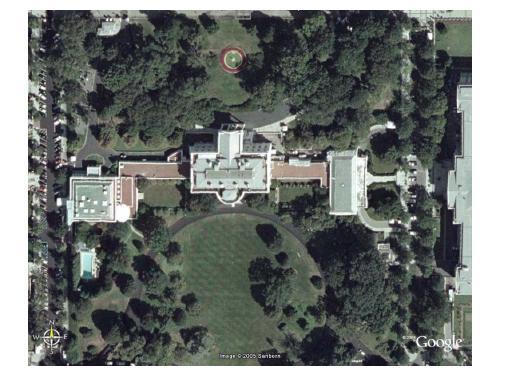
Somebody save us from these scaremongers: did you see the front page article in the Times of India today about how Google Earth is showing areas of Delhi, Bombay, Hyderabad, Bangalore etc. in great detail on the internet – and discriminating against us in doing so? “US gets satellite pics of White House blanked out but strategic Indian bases can be viewed openly” is the sub-heading of the (abridged) version on their website.

They should fire the reporter and the sub-editor: after reading this, I made what was only a cursory check and found that nothing of the White House (or any area around it) has been blanked out! In fact, neither have any of a number of other landmarks/ installations which can be counted as important – and this is all around the world, not just in the US, UK or India! In fact, as any user of Google Earth could have told these guys, metropolitan areas of the US are the ones that are covered in greatest detail. Times of India has been floundering on quality metrics for a long time now but this really takes the cake in both sloppy reporting and drawing asinine conclusions.

This is no big deal – and it is just the FREE version available to anyone around the world with a high-speed connection to the internet. There are more detailed views out there for anyone willing to pay relatively small sums of money for it and importantly, from a national security perspective there’s yet more advanced versions available with our enemy’s militaries! Technology is all around us: and it is for us to choose whether we want to use it – to educate our children, empower our entrepreneurs and serve our citizenry – or want to remain "blanked out" from the forward ranks of development.

And finally, with journalists like these (who are more concerned about "blanking out" than with shedding light on things), it is little wonder that we have taken forever to pass the Right to Information Act and struggle to implement it in letter and spirit.

N.b.

Where the mind is without fear and the head is held high;
Where knowledge is free;
Where the world has not been broken up into fragments by narrow domestic walls;
Where words come out from the depth of truth;
Where tireless striving stretches its arms towards perfection;
Where the clear stream of reason has not lost its way into the dreary desert sand of dead habit;
Where the mind is led forward by thee into ever-widening thought
and action --
Into that heaven of freedom, my Father, let my country awake.
Rabindranath Tagore

Saturday, July 30, 2005

A Million Mutinies Now

The spotlight has stayed trained on Siwan for almost 2 years now (it began in August 2003 when the law first started to catch up with Mr. Shahabuddin) and while it is far from certain that we have heard the last – see news stories in Indian Express, Times of India, Dainik Jagaran, PatnaDaily and NDTV about the transfer of Mr. Ratn Sanjay, Superintendent of Police and various elements of fallout: Mr. G S Kang, Chief Secretary, going on leave in protest; District Magistrate Mr. S K Mall refusing to relieve the SP; the new appointee Mr. G P Sinha entering a plea to change his posting; etc. – in this matter (soon, even if only briefly, the Election Commission will determine administrative vector), there are a few things to note.

First, Mr. Shahabuddin is not the only criminal in this drama. His mentor, Mr. Lalu Prasad Yadav (at the very least by association, probably by the more-than-tacit encouragement, and possibly by connivance in specific acts) is next in line; Mrs. Sonia Gandhi and Mr. Manmohan Singh in Delhi are close behind (by caving in to Mr. Yadav’s demands on such issues to protect their positions of power – there is a direct line of sight between their capitulation and encouraging criminal and anti-national forces elements: which makes it a tenable conspiracy charge in law); and Mr. Buta Singh, of course, by willingly being the hatchet man. One of these days, one imagines, Mr. Shahabuddin will die by the sword (having lived by it all his life). As for the others, they will likely have to contend with more difficulties along the way: sooner rather than later, Mr. Shahabuddin (and many others like him) are going to become more demanding (why shouldn’t he be a Union minister when others from RJD are?) and these “mentors” will not be able to say no – ever. All across the northern states (I am bounding this geographically only because I don’t have first-hand knowledge of the South), our multi-party system has degenerated into competitive criminalization and it is tragic that despite the long-standing spotlight, it is the good that is fighting a rearguard action against the evil.

But, and this is an important but, what is heartening is that it appears that the steel frame isn’t completely rusted yet. There are a number of joints in this frame which, when tested, do not just withstand immense pressure without buckling, but also signal to the world that maybe there’s hope for the whole frame! Maybe, it is not as rusted from the inside as it appears but has been made to look rusty by the filth that has landed upon it as the political environment around it has become the proverbial Augean stables (there are rotten elements in the bureaucracy, no doubt, but the political system – at least in some parts of the country – has become venal beyond redemption). These men and women express their protests in different ways but each of them does immense service to the cause of good governance in the country. May their tribe increase.

The message for voters in Bihar should be clear: if we don’t use our weapon – which we will be asked to wield very soon once again – carefully, we will subject ourselves to the tyranny of these criminals for at least another 5 years. Choose carefully.

Wednesday, July 13, 2005

Quis Custodiet Ipsos Custodes?

That the IB considers itself above the law of the land is well known. But that IB’s ex-chief would be so blatantly contemptuous of what he’s sworn to serve should be a cause for worry. Today’s Times of India (Mumbai edition; see online story here) reported on the arrest, by a Mumbai Police contingent in Delhi, of a gangster of note when the said gangster was traveling in a car with this ex-Chief of Intelligence Bureau. It appears that the two had gotten together to discuss some matters over breakfast (at an appropriately swank hotel in Central Delhi) and the retired official was extending the gangster a fairly common courtesy of dropping him to his next appointment, when the cops from Mumbai stepped in. Like many other instances, this too raises many questions. I want only one answered: what is the Union of India going to do about the retired officer’s culpability (at the very least, as a known associate of this gangster) in the matter?

If you are interested in reading a detailed account of how the Intelligence Bureau has been a complete pawn in the hands of the Prime Minister (it seems they bow to no one else – though this could be grandstanding) not just in the recent past but for at least about 30 years now, pick up a copy of Open Secrets (Maloy Krishna Dhar, 2005). I picked up a copy after reading an article in the Indian Express (see here) and becoming intrigued that someone – who is obviously in the know – could actually publish such stuff and invite no comment: either suits of defamation – for many of the dramatis personae are among us even today – or howls of ‘off with their heads’ from a wide cross-section of the press and citizenry. Read for yourself: either of these two paths would be logical follow-on even if one were to believe even 20% of what Mr. Dhar has recounted – and there’s no reason to lay such low credence to his tale (I believe him, mostly. He has tried, in many instances in the book, to clothe himself in martyr’s garbs but the cover is translucent at best: his co-conspirator role is, like the title, an Open Secret). But no, there’s been deathly silence about this book, its contents and the author. Many of my friends in the bureaucracy refuse to even acknowledge the existence of this book and almost none of them have read it. This deafening silence should speak for something in itself, right?

It is unmonitored, unaccountable parts of the government such as this that are the great unacknowledged threats to our civil society. As the specter of terrorism, insurgency and other such threats loom larger, these cloak-and-dagger types presume to become more important. What they need to remember is that till they accede to principles of liberty (and the boundaries imposed by its practice), they will never be able to occupy (and use to their advantage) the high moral ground versus those that they are trying to fight.

N.b. Of course, one can look towards some lesser lights for an answer. In the episode, Homer the Vigilante (the catburglar episode when Homer begins a vigilante group; they begin breaking a ton of laws themselves): Lisa : "Who will police the police?" Homer : "I dunno know. Coast Guard?"
But again, against the uncommon-ness of common sense among our politicians (current lot of 'intellectuals' included), who am I to include Homer in "lesser lights"?

Saturday, June 18, 2005

If thy (big) brother wrongs thee...

Earlier, I had written a short piece l’affaire Reliance (If thy brother wrongs thee…). Like many other well-wishers of Indian economic progress, I am glad that this chapter of public acrimony is done with and the brothers can now compete on business results for the right to be called the true successor of Dhirubhai.

One aspect of this closure which is both tragic and hilarious is how our ministers are tripping over each other to issue a clean chit in respect to all alleged irregularities. Both Chidambaram (Finance) and Gupta (Company Affairs) are busy shouting from the rooftops that this settlement obviates the need for any other enquiry. Look at what Chidambaram says in respect to the allegations leveled by the two sides during the battle (see Times of India here): “I am happy that settlement has been reached. Where is the need for other issues? If there is any specific violation or complaint, we can look into it. [But] after this settlement, I don't think there is any need for an inquiry.” Gupta is quoted later and the sentiments are the same: “since the settlement is already there, I think all the issues are resolved”.

I stake no position on elements of guilt, if any, in the various allegations raised by (current or erstwhile) insiders at the Reliance group. And, same as with Chidambaram and Gupta, it is not my remit to pronounce verdict on the issue. I wish C&G would recognize this and allow the investigators to do their job, and the judiciary (should the investigators find cause to involve this organ of the state), its job.

But again, I am assuming that this is because they know not what they do. What if they do know what they’re doing? What if, like the press during the emergency (“the pressmen had been asked to bend and they began to crawl”), the ministers are just doing what they believe will endear them to the best connected business in town?

Thursday, June 09, 2005

Ever vigilant - II

Writing in the Guardian (here), Sidney Blumenthal paints a very bleak picture of W’s lieutenants – and of what they’re prepared to do to subvert institutions in their quest for an across-the-board Republican majority, drawing parallels (and making the connection) with Nixon’s regime to make his point. Two things stand out: one, in the matter of Deep Throat and the outing of Watergate scandal M/s Woodward and Bernstein, they may have been more of pawns than center-pieces. Which is not all bad, should you be willing to accept that it’s all personal in the end (Had it not been for Felt’s sense of injustice at having been passed over, would he have mounted the same campaign to out Nixon’s shenanigans? Probably not, but maybe someone else, slighted differently, would’ve had done something similar, one hopes). And second, even in today’s day and age and even in a country as enamored with detailed background checks on public figures as the US, a hard-line clique with such ethically ambiguous past as M/s Cheney, Rove and Rumsfeld have remained at the nerve center of decision-making, pushing their very narrow-minded agenda for a fairly long time.

A good friend who is a proud citizen of the US never fails to remind me of how numerous, deep rooted and powerful the “self correcting mechanisms” in the US society, economy and politics are. In matters such as these, however, I wonder whether I shouldn't ask him to research applicability of Rudi Dornbusch’s work on exchange rates and overshooting to social/ political change too (including, of course, the determination of the degree of overshooting which could materially impair, even if not permanently destroy, some or all of these "self correcting mechanisms").

Once again, the point is simple: we may not have the leverage that Mark Felt had, we may not create the impact that he did but what we will always have is the ability to increase the counterbalancing weight when things overshoot in the wrong direction - for this, as before, we need to remain ever vigilant.

N.b.
51 years ago, on June 9, 1954, US Army counsel Joseph N. Welch confronted US Sen. Joseph R. McCarthy during the Senate-Army Hearings over McCarthy's attack on a member of Welch's law firm, Frederick G. Fisher. Said Welch: "Have you no sense of decency, sir? At long last, have you left no sense of decency?" Read the next day's reporting by New York Times here.

Wednesday, June 08, 2005

The many denominations of secular

Amit Chibber commented on yesterday's post, Saagar manthan and referenced the issue of defining secular: which of the definitions - US First Amendment (equal blindness), India (equal affirmation), France (affirmative atheism) - is "correct". I refrained from labeling my preferred definition of secular as “correct” in the original post for the very reason that there are competing versions. I am however, convinced that the ‘blind to religion in matters of state’ interpretation is the only workable solution (and therefore, the “correct” interpretation – should you want me to declare) in a multi-denominational society like ours.

The equal affirmation route, which we have been working with for the past so many decades, can not serve us well on a number of counts: (a) competitive populism – which equal affirmation encourages – is too big a temptation for any politician, and more so for those who have been reared on such a diet since their infancy. Notably, the direction of policy in such competitive populism approximates the ever decreasing spiral that a moth describes in his journey towards the flame; (b) in a society like ours – with the number of denominations being what they are and indeed, with the definition of Hinduism being as broad ranging as it is – it is difficult to find the point (across one, more or all dimensions of policy) which represents ‘equal affirmation’ and we end up on an ever oscillating see-saw where balance, desirable as it may be, is ever elusive; (c) it serves as yet another manifestation of the state as a ‘provider’ in a realm that is essentially private. As for the French interpretation, it is more statist than I am comfortable with and also, it does commit the state to one denomination – to the extent that atheism is, in itself, a doctrine pertaining to religion.

In any case, the framers of Indian constitution did the best in the circumstances they were presented with and we have "equal affirmation" as our guiding light for now. This, however, does not mean that "equally blind" will go against the spirit of our constitutions for, equal affirmation (with the degree of affirmation set to zero) is "equally blind".

Tuesday, June 07, 2005

Ever vigilant

A new book by two Washington Post journalists (Kremlin Rising: Vladimir Putin's Russia and the End of Revolution; Peter Baker and Susan B. Glasser; Scribner; 2005) recounts how Mr. Putin has systematically subverted all institutions in Russia that are capable of challenging his authority. An article based on the book appeared in today's Post and can be found here (registration may be required). The article is a must read; specially for those among us who have forgotten - or never cared to find out about - the excesses of emergency. I was reminded of this when someone, waiting with me for an incoming train that was delayed, wistfully spoke of the efficiency in public services during the emergency period.

Absolute power corrupts absolutely - without exception. And, in a democratic setup where democracy is mapped uniquely to the conduct of an electoral process, people forget that elements such as a free press, rule of law, separation of powers etc. are equally important. It is easy to let these institutions and forces decay - specially when vested interests adopt salami tactics and chip away slowly at various peripheral points to ultimately destroy them. In order to ensure that we - or those who come after us - don't live through another period where even habeas corpus is suspended, where elected representatives don't assume that their election means a license to govern autocratically, we need to be ever vigilant.

N.b.
The habeas corpus (literally, produce the body; this writ tests only whether a prisoner has been accorded due process, not whether he is guilty; a safeguard against illegal imprisonment originally formalized in the Habeas Corpus Act of 1679 in England) issue is an extreme example but it is important as a reminder of how much was given up in personal freedom not too far in our past.
On April 28th 1976, 4 of the 5 senior-most Hon'ble Justices of the Supreme Court of India overruled decisions from as many as 9 High Courts in the country in the matter of ADM Jabalpur v Shivakant Shukla [(1976) 2 SCC 521]. They were the then Chief Justice A.N. Ray, along with Justices M.H. Beg, Y.V. Chandrachud and P.N. Bhagwati. The lone dissenting voice was that of Justice H.R. Khanna of whom the New York Times remarked: 'surely a statue would be erected to him in an Indian city'. Justice Khanna paid the price for his dissent. He was next in line to become Chief Justice of India. He resigned when his junior, Justice M.H. Beg, superseded him (for an account of how the 4 Hon'ble Justices tried to use elegant prose to cloak their blatantly craven pronouncement, see Jos. Peter D 'Souza's account in PUCL Bulletin of June 2001 here).